Sleep Trackers: Do They Help? Should You Get One?

get good sleep

Many of my new clients tell me that they have been using sleep trackers and sleep apps that promise to measure sleep.  They aren’t always certain that the information they receive is accurate or even useful.  They want to know my opinion(s).  And anyone that knows me is aware that if you ask my opinion, you will absolutely receive it.  In detail.

Well…..

These are mostly either apps that sense your body movement while you are in bed, or wearables that monitor your heart rate, breath rate, and more.  Some are attached to CPAP machines.  What they DON’T measure is what a somnograph does:  brainwaves.

They can’t measure brainwave activity.  That happens in a sleep clinic.

This means that your app and your wearables are using secondary signs of sleep to provide feedback about your sleep.  Not getting the whole story makes taking action harder.

This is like checking the shelves in a store to measure whether the business is making money or not.  Something is selling.  Money is changing hands.  Whether or not profit is being made can’t be definitively determined by shelf stock numbers.  You have to look “under the hood” to know for sure.

lavender

This means that you need to take an app’s/wearable’s interpretation with a grain of salt and interpret the interpretation.  This confuses people, and they often prefer to take the readouts and the interpretations at face value. Do that, and you could end up with inaccurate beliefs about the quality of your sleep.  In both directions.  Without somnography, we have to look at your subjective sense of being rested and renewed, your sleep diary and compare it  with your chronotype, and your overall ability to function during the day.

This is one of the best reasons to get a sleep coach.  We drill down and work with you so that you can eventually do your own assessment of your sleep.  You learn so much about sleep that you can figure out how to tweak things months after we finish our CORE sessions.

Being able to look “under the hood”  tells us a lot more about the quality of your sleep than a sleep tracker can offer you.  After all, the older you get, the more likely it is that your sleep issues are complicated.  There is no way that a movement sensor or a breath counter is going to help you solve a complex problem.

So What Can a Sleep Tracker/Sleep App Do?

  1. Motivate you.  Some people like to have numbers.  They like something to record or graph.
  2. Provide information to your doctor or sleep coach.  They have the training to interpret the interpretations.
  3. Give you early warnings that your new sleep plan isn’t working, or your new medication/ CPAP machine isn’t giving you the results you want.
  4. Remind you how important sleep is to your health.  Life is complicated.  Keeping sleep as a priority isn’t easy when you are being pulled in a million directions.  Your app/wearable is a reminder that sleep is important.

Want more information about sleep coaching?  Get in touch with me!


Go back

Your message has been sent

Warning
Warning
Warning
Warning.

Do You Need an Alarm to Improve Your Sleep?


dog sleeping

Simple answer:  Only if your current sleep quantity and quality could use a boost.  If you wake refreshed at the same time every morning after 7.5-9 hours of continuous sleep (short pee breaks excepted) then you might not need an alarm clock.

Longer answer:  If you have problems sleeping or don’t feel refreshed when awakening, using the right alarm and ditching the snooze function can be the cornerstone of getting better sleep.   

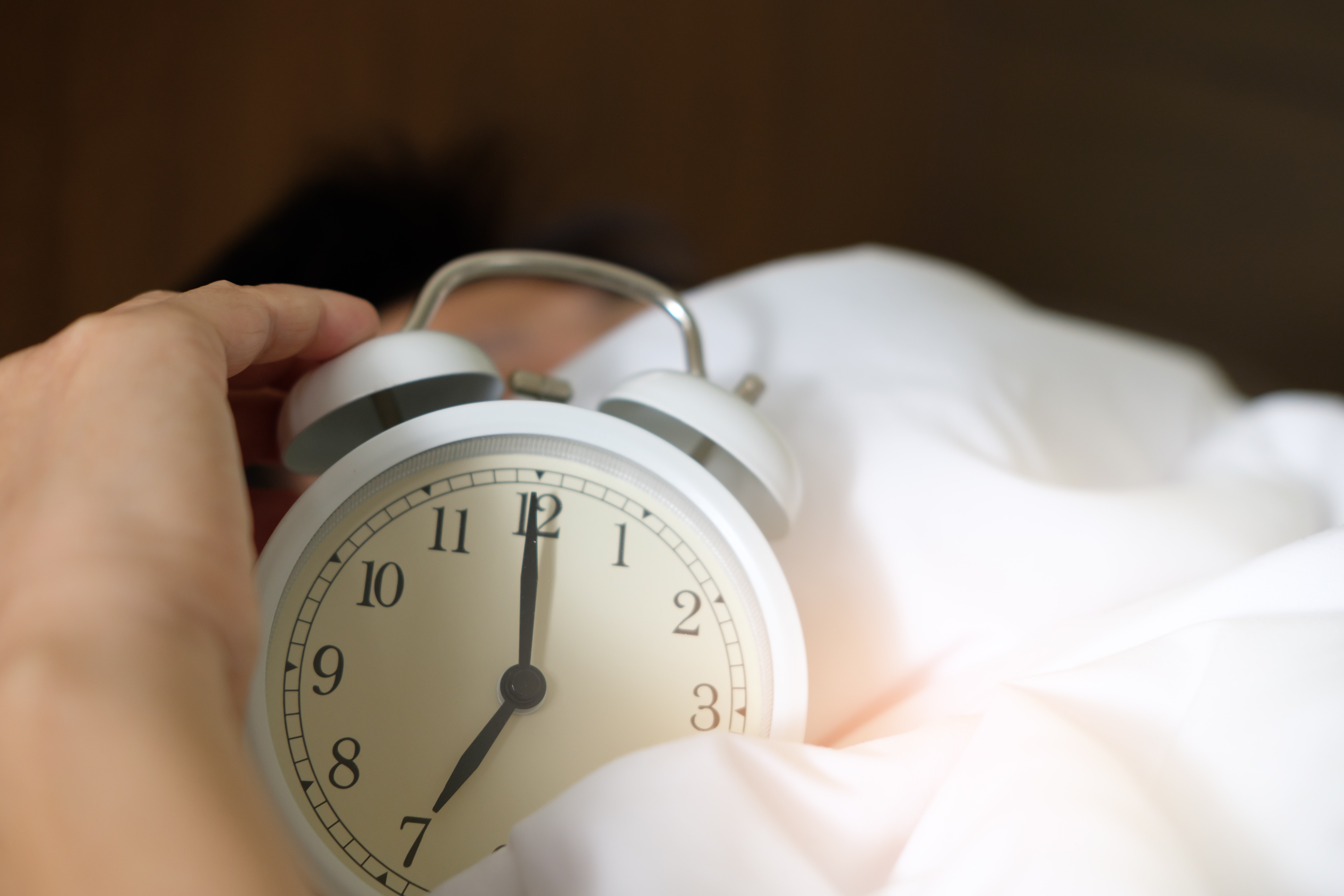
Alarm clocks help us get up when we need to, but they also set our circadian rhythm on its path to triggering tonight’s sleepiness at the best time.  Waking at the same time every day, weekends included, supports sleep and health.  The studies are out there.  This isn’t conjecture.  And it could be the easiest action to take to improve your sleep.  

I like that.  Telling people to use a complicated routine is the fastest way to turn them off of sleep therapy.  This is a “crockpot” strategy.  Set it and forget it.  Work with your body instead of against it.  But use the sleep science to refine your actions and boost your success rate.

How to choose a clock

There are a lot of alarm choices out there.  It used to be one choice:  a little box with a clock face.  Now you can have lights, phones, vibrations, and more.  They will wake you with anything from your fave song to birdcalls to gradual illumination.

If your sleep is satisfying and long enough, be creative.  Pick what appeals to you, because it probably won’t make much difference to your health.

alarm-clock

 If you fail to wake quickly enough with gentle sounds or lights, you need something more intense.  Remember; waking doesn’t mean that you won’t be fully awake right away.  That is normal.  Your brain is shifting brain wave states and coming to fully alertness.  You may shuffle around the house a bit and even feel slightly disoriented.  

Some people prefer not to hear a harsh buzz or even the first notes of a song.  For people with cardiac issues or dysautonomia, which we see with POTS and sometimes with long COVID, that could be an undesirable physical shock. That is fine; there are alerting choices that won’t be so intense.  Many alarm clocks offer a variety of frequencies and patterns. Find one that is alerting enough without shocking your system or putting you in a grouchy mood first thing in the morning.   If your bed partner tells you that your new “gentle dawn” clock has been at full light for 30 minutes and you just opened your eyes, it isn’t doing much for you.  


If you fail to wake with TWO loud alarms, you should probably be wondering why you sleep so soundly in the morning that you cannot rise without shock.  This automatically has me thinking medications are sedating you or you are experiencing such a severe sleep deprivation from little sleep in the preceding nights that your brain is “starved” for sleep.  The third option is a medical sleep disorder or the prodrome to something neurological.  That requires a physician’s evaluation, so tinker with the other two first.   That way your doctor will have a clearer path for their evaluation procedures.

Where do I place an alarm clock?

That depends on how you respond to it.  If it is next to your bed and once you shut it off you get up, done and done.  If you ignore it, then it needs to be far enough away that you must rise out of bed to turn it off.  If you can go across the room, turn it off, and get back into bed, then you need something like an app that makes you answer a series of questions before it shuts off.  Or the clock that has mag tires and rolls around the floor to be caught by YOU!  Don’t forget that any device that has an illuminated screen should be dimmed in some way to lower the amount of light in your bedroom.  You can turn the light to the wall, cover it with an adhesive dimming film, or adjust the illumination on the the clock. 

breathing trauma


Are You “Wired and Tired”?

alarm-clock

That is a phrase I heard Dr. Matthew Walker use to describe, well, most of us with insomnia.  He is on the staff at UC Berkeley’s sleep program.  It refers to being wide awake but exhausted at bedtime.

We “release” into sleep.  We must sufficiently drop the worries of the day in order to get to sleep and stay asleep.  Or we don’t sleep much or very well.  Disturbing dreams and the inability to fall back asleep are the consequences of being unable to disconnect from the challenges of our awake lives.

What can you do?

Using CBT-i strategies, I teach my clients the 5 most effective evidence-based strategies to let the day go so that they can sleep.  This works well for many clients, but there are additional things we can do to reduce the effects of anxiety in order to get better sleep.

Some clients also need to work on making their daily routines support sleep.  Matching their routines to their body’s chronotype (circadian pattern) as well as their specific sleep needs makes falling asleep easier.   The older we get, the more we need to work with our chronotype rather than against it.

A client  may also need to expand their wind-down routine, making it longer or more layered.  Adapting the bedroom environment to maximize sleep removes another barrier to rest.  We do this together, because there is no benefit in reinventing the wheel.  Sleep therapy is not guiding someone through a manual.  It is tailored to the person like a well-made suit.

breathing trauma

Using the science and receiving targeted support is the most effective way to improve sleep problems that are not the result of a medical condition.  And even if there is a medical condition, most people have to alter some bad habits they picked up along the way to being diagnosed and treated.  CPAP users, this means YOU!

Want more information on improving your sleep?  We can work on this together!

 Contact me:  www.360sleepconsulting@gmail.com

Welcome!

Life can be hard. Sleep should be easier.

Everyone can improve their sleep, regardless of their age or the complexities of their life. Using the best strategies that behavioral science has to offer, you can learn how to sleep better and wake up feeling refreshed. Knowing what will make the greatest difference in the shortest time and with the fewest risks is what CBT-i is all about.

Let’s work together, starting today!